Why Voice-AI is the Missing Piece in Automation
Voice-AI, or Artificial Intelligence powered by natural language processing and speech recognition, bridges the gap between human interaction and automated systems.

Automation has revolutionized industries, streamlining processes and boosting efficiency. From robotic assembly lines to sophisticated software algorithms, we've come a long way in handing repetitive tasks over to machines. But for all its advancements, a crucial element has often been overlooked: the human voice. Enter Voice-AI, a technology rapidly emerging as the missing piece in truly comprehensive and intuitive automation.
Voice-AI, or Artificial Intelligence powered by natural language processing and speech recognition, bridges the gap between human interaction and automated systems. It allows us to communicate with technology in the most natural way possible – by speaking. This seemingly simple capability unlocks a wealth of benefits, transforming how businesses operate and how individuals interact with the digital world.

Free Executive 1:1 Growth Review
Exclusive for Overwrite Media readers.
At no cost, get 20 minutes with senior specialists who will:
• Review your current marketing
• Surface the fastest wins
• Deliver a custom audit + clear action plan
The Undeniable Benefits of Voice-AI in Automation
Integrating Voice-AI into automation strategies brings a host of advantages:
- Enhanced Efficiency: Voice commands can execute tasks much faster than traditional manual inputs or even graphical user interfaces. This speed translates directly into increased productivity across various sectors.
- Reduced Operational Costs: By automating routine voice-based interactions, businesses can significantly cut down on labor costs associated with call centers, data entry, and other administrative tasks.
- Improved Accessibility: Voice-AI makes technology more accessible to individuals with disabilities or those who find traditional interfaces challenging. It empowers a broader user base to interact with automated systems seamlessly.
- Personalized User Experience: Advanced Voice-AI can understand nuances in human speech, intent, and even emotion, allowing for more personalized and empathetic interactions that enhance customer satisfaction.
- Streamlined Workflows: Voice integration can simplify complex workflows, enabling employees to manage tasks, retrieve information, and control systems hands-free, leading to smoother operations.
Voice-AI in Action: Real-World Use Cases
The applications of Voice-AI in automation are vast and continually expanding. Here are some compelling examples:
Healthcare: Automating Patient Communication
In the demanding healthcare sector, Voice-AI is proving to be a game-changer. Companies like Assort Health are deploying AI voice agents to automate high-volume patient communications, managing tasks such as scheduling appointments and answering frequently asked questions. This innovation frees up human staff to focus on more complex and critical patient interactions, significantly improving efficiency and patient care quality (Startup Ecosystem Canada).
Improving Communication Skills with AI Coaching
Beyond automating organizational tasks, Voice-AI is also empowering individuals. Vocal Image, an Estonia-based startup, utilizes AI-powered coaching to help people enhance their voice and communication skills. Through personalized feedback and interactive exercises, Voice-AI provides an accessible and effective way for users to improve their public speaking, presentation abilities, and overall self-confidence (TechCrunch).
Food Service: The Drive-Through Experience
Even in the fast-food industry, Voice-AI is making inroads. Taco Bell, for instance, has been exploring the use of voice AI-powered ordering at its drive-through locations. While the implementation comes with its own set of learnings and considerations regarding customer reception and the need for human intervention in certain scenarios, it highlights the industry's drive to integrate voice automation for faster and more efficient service (The Wall Street Journal).
The Future is Conversational
The evolution of automation is moving towards more intuitive and human-centric interactions. Voice-AI is at the forefront of this shift, offering a natural and efficient way to interact with complex systems. As the technology continues to mature, we can expect to see even more sophisticated applications, further blurring the lines between human and machine capabilities and unlocking new levels of productivity and user satisfaction.
Voice-AI isn't just an add-on; it's becoming an indispensable component for businesses aiming to create truly seamless, efficient, and user-friendly automated environments. It's the missing piece that empowers automation to not only perform tasks but to understand and respond in a way that feels inherently human.
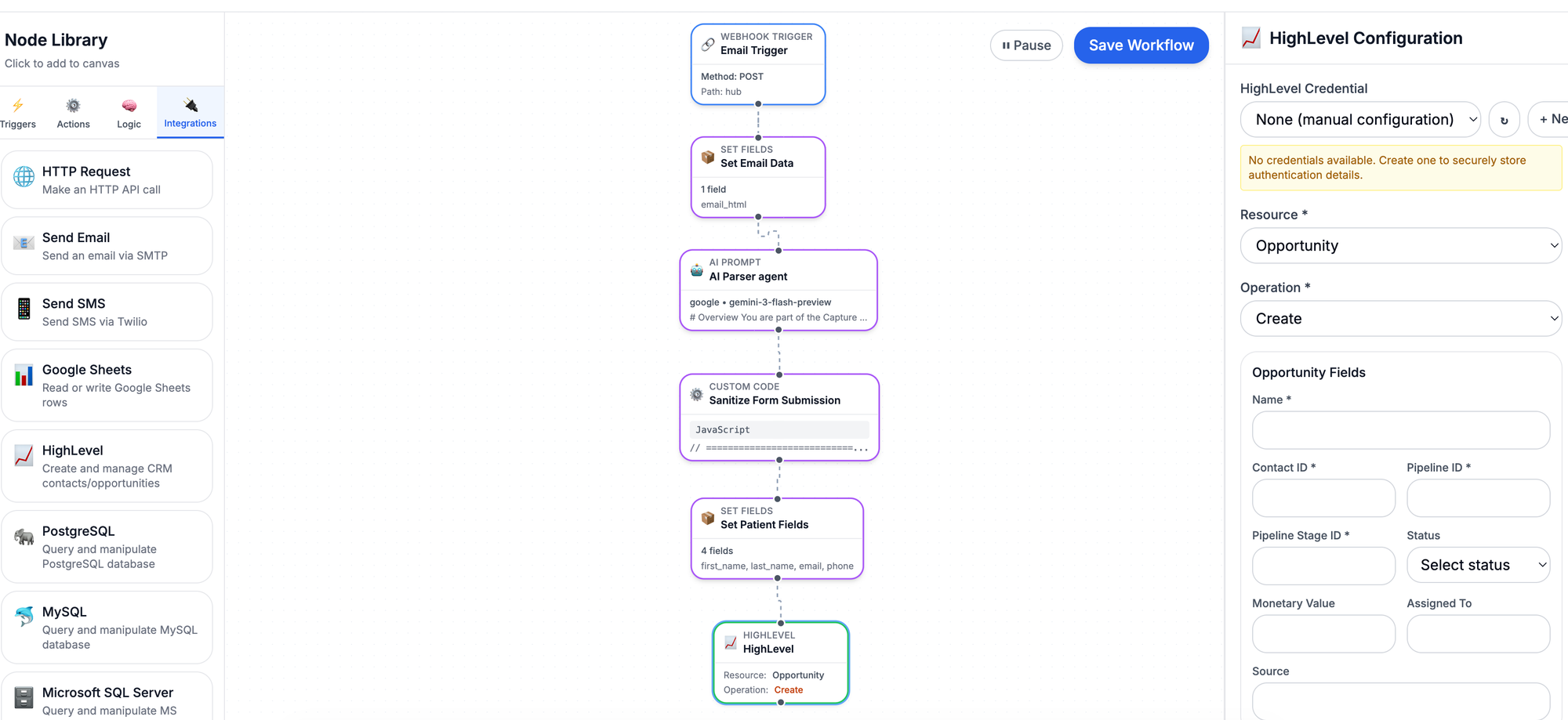
Falcon Builder by NeoSky AI is officially live.
It’s a no-code platform for building, deploying, and running AI agents and workflows — with real execution, real integrations, and real usage controls.
You can:
• Vibe-code your AI agent with our AI Agent Generator
• Trigger workflows via webhooks, schedules, or email
• Use OpenAI, Anthropic, Gemini, or Ollama
• Connect directly to databases and APIs
• Monitor executions with full logs and limits
• Scale from free to enterprise without rebuilding anything
Start building here: 👉 https://www.falconbuilder.dev